

I have a confession that won’t surprise anyone: I’ve been “done for the day,” opened TikTok for a minute, and resurfaced later like I’d taken a wrong turn in fog.
It’s rarely the content. It’s the format.
I start on something useful. A cooking clip. A product teardown. A designer explaining a layout trick. Then the trail dissolves. I’m watching a stranger pressure-wash a driveway with the focus of a monk. My thumb keeps moving. The videos keep arriving. Nothing is terrible. Nothing is finished. And somehow, I’m still there.
Here’s where the internet tells you to have more discipline. Fine. But if you’re a designer, recognize the pattern before you moralize it.
Short isn’t the problem. The loop is.
The distinction that matters Link to heading
Snack: the unit. A short video, a meme, a quick post.
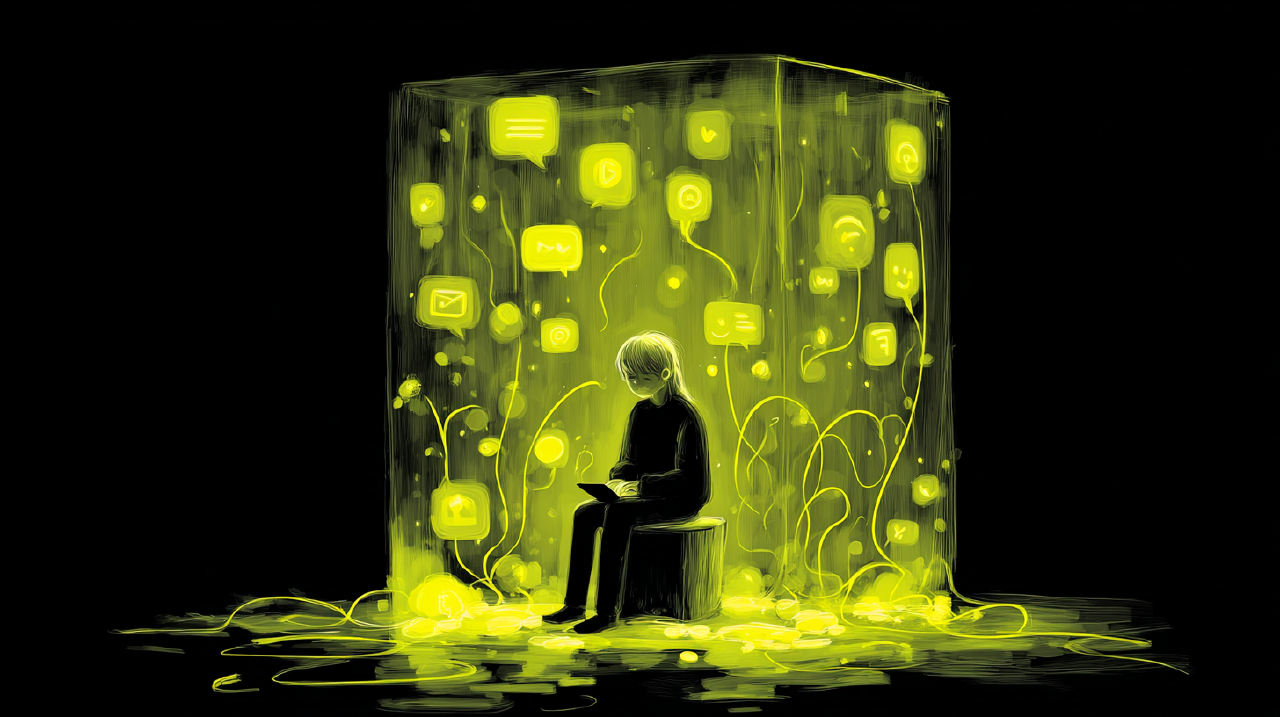
Loop: the habitat. Infinite inventory, algorithmic curation, one-flick switching, rewards for staying inside the stream.
A snack can be part of a sane day. The loop turns “a snack” into the whole diet.
Your brain doesn’t pledge allegiance to depth each morning. It learns the terrain you keep putting it in.
The switch tax Link to heading
Feeds like TikTok, Reels, and Shorts are built around an almost magical property: the cost of switching is close to zero.
Switching has a cognitive price anyway. When people switch tasks, they get slower and more error-prone, even with time to prepare 5 . That’s in simple lab tasks. A real feed adds emotional cues, social comparison, novelty, and micro-temptations.
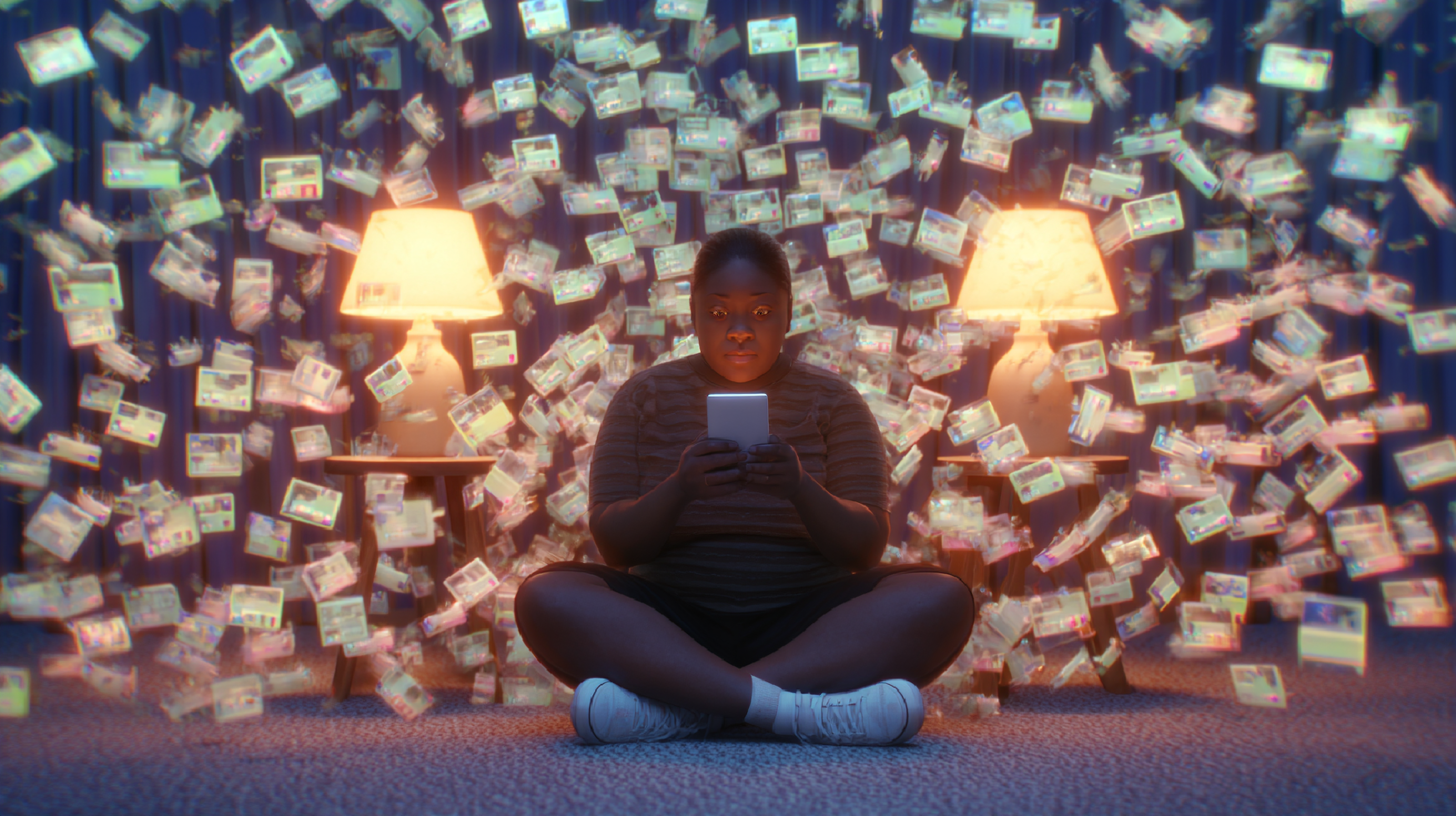
A swipe feed is a switch machine.
New face. New context. New goal. New norms. New joke. New politics. New song. New kitchen gadget. New hot take. New moral outrage. And then, a dog.
Your thumb thinks it’s browsing. Your brain is paying a switching tariff on every border crossing.
A little switching is normal. A lot of switching becomes training. Nicholas Carr’s argument in The Shallows is the popular version: if you practice skimming and bouncing, you get better at skimming and bouncing. Neuroplasticity isn’t a motivational poster. It’s the mechanism 12 .
Short isn’t the problem. The loop is.
Attention: always on, rarely aimed Link to heading
The loop rewards a specific attentional posture: constant orientation.
You’re not reading. You’re not watching. You’re scanning for relevance. A continuous, low-level audition: Is this worth my time? Is the next one better? Did I miss something? What if I swipe now?
It looks like engagement. It feels like busy curiosity. But it trains attention to expect high novelty density and fast rewards.
The famous PNAS study on media multitasking found that heavy media multitaskers were more susceptible to irrelevant stimuli and showed poorer cognitive control 4 . It’s an imperfect map to TikTok. The family resemblance is strong. You can’t build a daily habit of rapid context switching and act surprised when deep focus feels less available on demand.
Eyes on screen. Aim eroded. These are different achievements.
Memory: vivid now, thin later Link to heading
Memory likes shape. It likes beginnings and endings. Continuity. Things that can be retold.
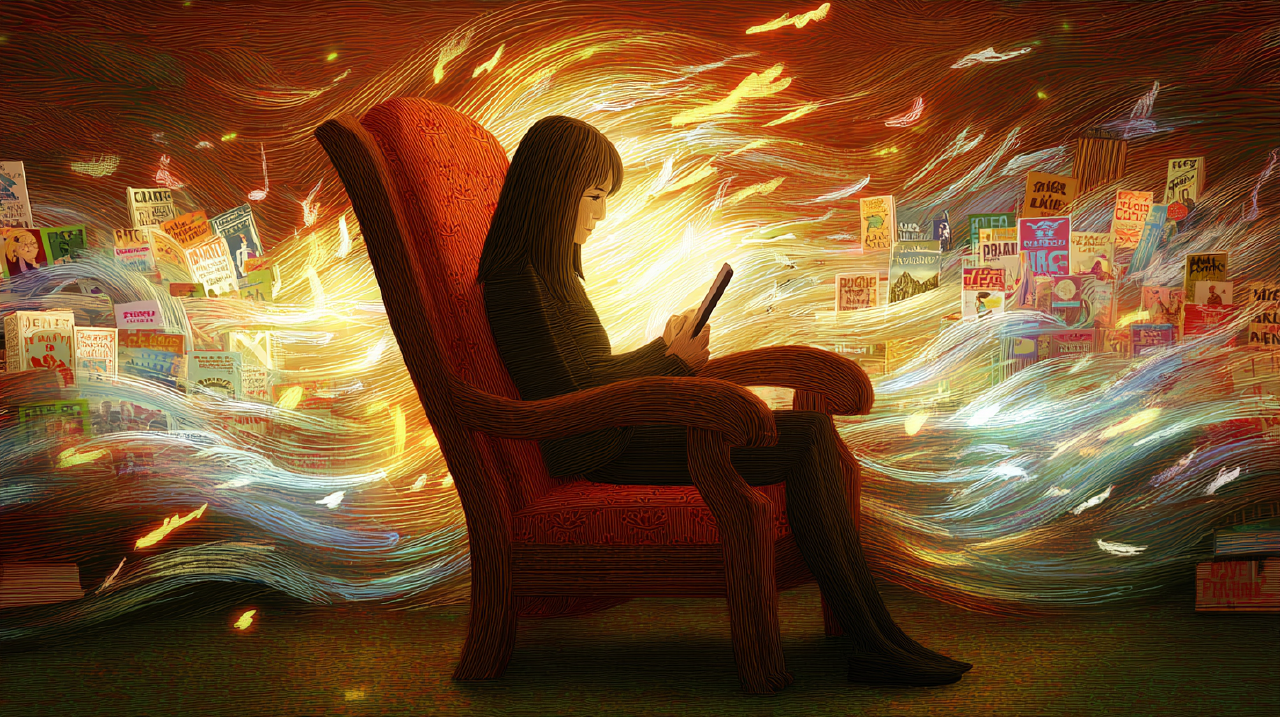
The loop is a stream of postcards from different continents. You admire the view. You can’t build an itinerary.
A CHI 2023 study tested what happened to prospective memory, the ability to remember intentions, when people took a break using TikTok, Twitter, YouTube, or simply rested 2 . TikTok significantly degraded performance. Twitter and YouTube did not show the same pattern.
The plausible culprit is short videos plus rapid context switching 2 . This doesn’t mean “video is bad” or “people are weak.” The format loads the system.
If you’ve ever opened a short-form feed and then forgotten what you opened your phone for, this is the lab version of your little life moment.
Intention retention is how you stay an agent. The loop quietly erodes it.
The boredom trap Link to heading
One of the most convincing recent studies doesn’t start with dopamine lore or moral panic. It starts with boredom.
Katy Tam and colleagues ran seven experiments (N=1,223) and found a bidirectional relationship: people switch because they’re bored, and they believe switching will help. But switching, between videos and within videos, increased boredom and reduced satisfaction, attention, and meaning 3 .
That last word makes designers raise an eyebrow.
A feed can be optimized for time spent while making the user’s experience feel less meaningful. That’s not a paradox. It’s a known property of optimizing a proxy.
Switching feels like agency. The choice is shallow: pick the next stimulus. The loop turns “I’m bored” into “I’m more bored, but faster.”
The wider view Link to heading
A 2025 systematic review in Psychological Bulletin looked at cognitive and mental health correlates of short-form video use across 71 studies and about 98,000 participants 1 . They report associations between greater short-form video use and poorer cognitive functioning, with attention and inhibitory control among the strongest links.
Three notes, because nuance matters:
These are largely correlational findings. They don’t prove causation. Short-form video use can be a symptom as much as a cause; people who struggle with attention may gravitate to a format that fits their current capacities. And even with cleaner causality, results stay conditional: content, context, and user goals matter.
So no, the science doesn’t justify “ban snackable content.” Cognition adapts. It trades off.
But the evidence is strong enough to justify a design conversation more serious than “people can just log off.”
Short isn’t the problem. The loop is.
Follow the money Link to heading
Now the part designers don’t always want to say in polite company.
The loop isn’t an accident. It’s a business model wearing a UX costume.
A system that keeps you in-session, switching, and emotionally warm is extremely valuable. More minutes means more ads, more commerce, more data, more surface area for persuasion.
The loop is also easy to measure. “Time spent” looks crisp on a dashboard. “Did the user leave feeling mentally intact?” is harder to capture and harder to defend in a quarterly review.
You don’t need a conspiracy theory. You just need incentives.
Which is why the most interesting shift in the last few years is that TikTok has been quietly changing the definition of “snack.”
The platform is going longer Link to heading
TikTok expanded max video length to three minutes in 2021 7 , then ten minutes in 2022 8 . That’s not a moral conversion. That’s product strategy.
Longer content is easier to monetize. It carries ads more naturally. It supports creator economics that look more like YouTube. It gives brands room to hold attention long enough to sell something.
WIRED noted TikTok’s internal tension: longer videos can be stressful for users trained on short clips, yet longer watch time is attractive for advertisers 11 . TikTok’s Creator Rewards Program now explicitly rewards original content over one minute, with metrics including play duration 9 .
If you want to know what the system values, look at what it pays for.
Buffer analyzed 1.1 million TikTok videos and found that videos longer than 60 seconds tended to get meaningfully higher reach and watch time 10 . Users aren’t allergic to time. They’re allergic to wasted time.
The loop often feels like wasted time because it rarely gives you a sense of arrival.
A hypothesis for designers Link to heading
A cognitively healthy media diet isn’t “short vs long.” It’s discovery vs integration.
Snackable content excels at discovery. It helps you bump into new ideas, lowers activation energy, serves as social glue.
Depth content is where integration happens. It’s where you revise your mental model, consolidate memory, connect fragments into something that guides action.
The loop sabotages integration by removing endings.
Endings aren’t an aesthetic preference. They are a cognitive feature. People stop when something ends. People remember when experience has an arc. John Dewey made this point in a different vocabulary: experience becomes meaningful when it has continuity and felt shape, not just stimulation.
In Japanese aesthetics, ma is the pause that gives form: no popup, no scolding, just a pause that makes the whole thing legible.
If you’re building feeds, you don’t have to turn snacks into lectures. But you can stop pretending the loop is neutral.
What better looks like Link to heading
I’m not proposing modal dialogs that ask if you want to “take a break.” That’s the digital equivalent of a plastic safety sign flapping in the wind. People ignore it, then screenshot it for irony.
If you want to honor cognitive health while shipping a product people use, you need quieter interventions that change the terrain.
Add endings. Session arcs. Finite sequences. A “you’ve reached the end of this thread” moment used as orientation, not punishment.
Make returning easier than switching. If every swipe is a border crossing, help users build continuity: continue this topic, hold this theme, pick up where you left off. People don’t only want novelty. They want coherence. The loop doesn’t offer it.
Treat saving as a return path. A good save system preserves context: why did I save this, what was I trying to do, where do I go next? Build a breadcrumb trail instead of a junk drawer.
Measure regret. You don’t have to ask users directly. Instrument proxies: immediate reopens, late-night spirals, rapid switching bursts, abandon rates after long sessions. If your system maximizes time-on-app while also maximizing “ugh, what did I just do,” your metrics are lying to you.
These aren’t moral reforms. They’re basic craft.
The turn Link to heading
You’ve read this far. You probably understood it all.
You’ll still open the app tonight. So will I. The loop includes people who understand the loop.
That’s not a failure of willpower. It’s a design achievement, one we might want to stop celebrating.
The evidence doesn’t justify panic. It does justify clarity:
Rapid context switching has measurable costs 5 . Heavy switching styles are associated with weaker cognitive control and memory 4 . Short-form, high-switch feeds can impair prospective memory in experimental settings 2 . Switching can increase boredom and reduce meaning, even when users think it will help 3 . At population scale, short-form video use is associated with poorer cognitive functioning in the current literature 1 .
And the market is already nudging the format: platforms are stretching “short” longer because engagement and monetization follow 7 9 11 .
So maybe the most honest question isn’t “is snackable content bad?”
Maybe it’s this:
What do we build if we value a user’s ability to remember their intentions as much as we value their ability to keep scrolling?
Tomorrow night, I’ll still watch the driveway video. I’m not asking for purity.
I’m asking what we’d design if we took the loop seriously.
Sources
- Feeds, feelings, and focus: A systematic review and meta-analysis examining the cognitive and mental health correlates of short-form video use Lan Nguyen et al. (2025) Psychological Bulletin. 1
- Short-Form Videos Degrade Our Capacity to Retain Intentions: Effect of Context Switching On Prospective Memory Francesco Chiossi et al. (2023) CHI ‘23 paper (preprint). 2
- Fast-forward to boredom: How switching behaviour on digital media makes people bored Katy Y.Y. Tam et al. (2024) Journal of Experimental Psychology: General. 3
- Cognitive control in media multitaskers Eyal Ophir, Clifford Nass, Anthony D. Wagner (2009) PNAS. 4
- Task switching Stephen Monsell (2003) Trends in Cognitive Sciences. 5
- Media multitasking and memory: Differences in working memory and long-term memory Melina R. Uncapher et al. (2016) Psychonomic Bulletin & Review. 6
- More Tok on the Clock: Introducing longer videos on TikTok TikTok Newsroom (2021). 7
- TikTok expands max video length to 10 minutes, up from 3 minutes TechCrunch (2022). 8
- Introducing the New Creator Rewards Program TikTok Newsroom (2024). 9
- Longer TikToks Get More Views: Data Shows Best Video Length Buffer (2025). 10
- TikTok Wants Longer Videos Whether You Like It or Not WIRED (2022). 11
- The Shallows: What the Internet Is Doing to Our Brains Nicholas Carr (2010) W. W. Norton. 12