

The trailhead Link to heading
A product manager sits down to write a spec. The kind that actually matters. No status update. No comment-shaped apology. A real attempt to name a problem and choose a direction.
She opens the doc. Cursor blinks. Brain spins up. For a moment, the terrain is clear.
Then the first ping lands.
A Slack mention that can wait. An email that allegedly cannot. A calendar reminder for a meeting about a meeting. She handles it. Fast. Competent people do.
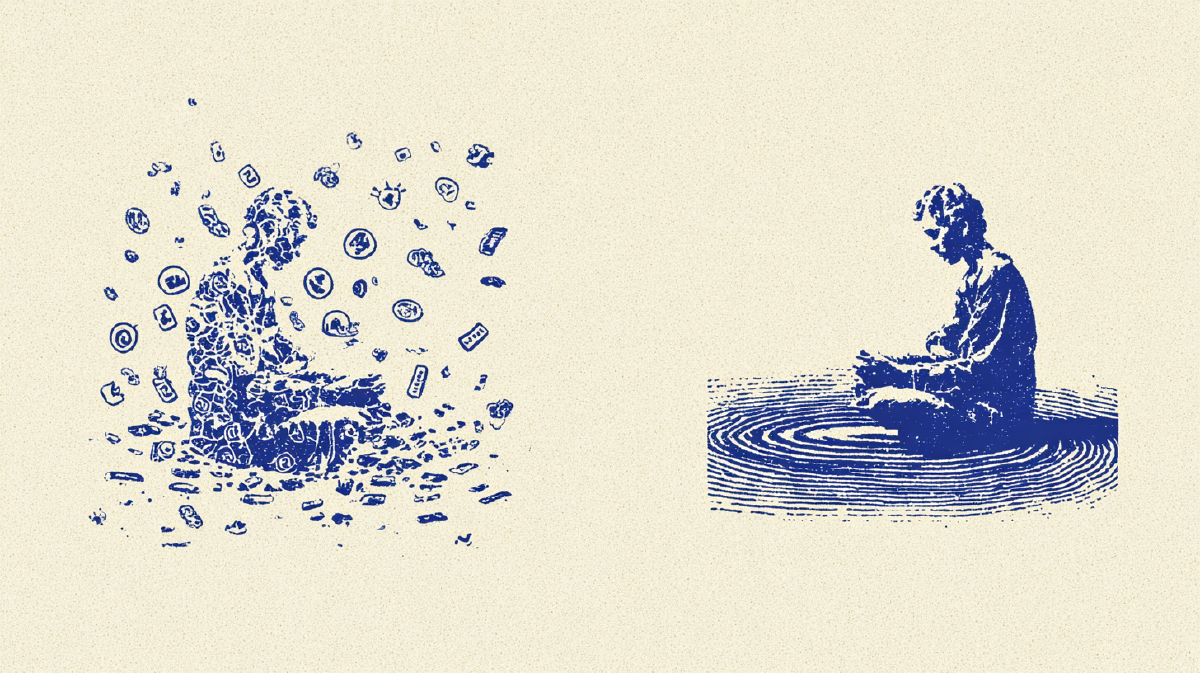
Five minutes later she’s back in the doc, except she isn’t. She’s reading her first paragraph like a tourist. Reconstructing a mental model that was never allowed to settle.
You know this scene. You also know the quiet punchline: we treat distraction like a personal weakness while we ship interruptive systems as if attention were free.
It isn’t.
William James, writing in 1890, called attention selection. To attend is to take possession of one thing and withdraw from others. Distraction isn’t the opposite of virtue. It’s selection failing to hold. 1
Flow is what selection feels like when it finally stops slipping.
Flow is a corridor, not a mood Link to heading
Flow gets marketed as “being in the zone.” That’s not wrong, just incomplete. Flow is a specific operating window where three conditions align: the challenge stretches your skill without crushing it, the goal is clear enough to aim at right now, and feedback comes fast enough to correct course. 2
When these inputs converge, attention has a reason to stay put. The mind invests. Action and awareness merge. Time warps. The internal narrator quiets.
Two details matter for product people.
First, flow isn’t ease. The corridor sits between boredom and anxiety. Too easy and attention roams. Too hard and attention fractures into worry. 3 A flow-supporting environment doesn’t remove challenge. It removes noise that makes challenge feel pointless.
Second, flow has infrastructure. It depends on continuity. You can’t get “deeply absorbed” while your environment keeps reopening the question: Are you sure this is what matters right now?
That reopening is what modern software does best.
Where trails become crosswalks Link to heading
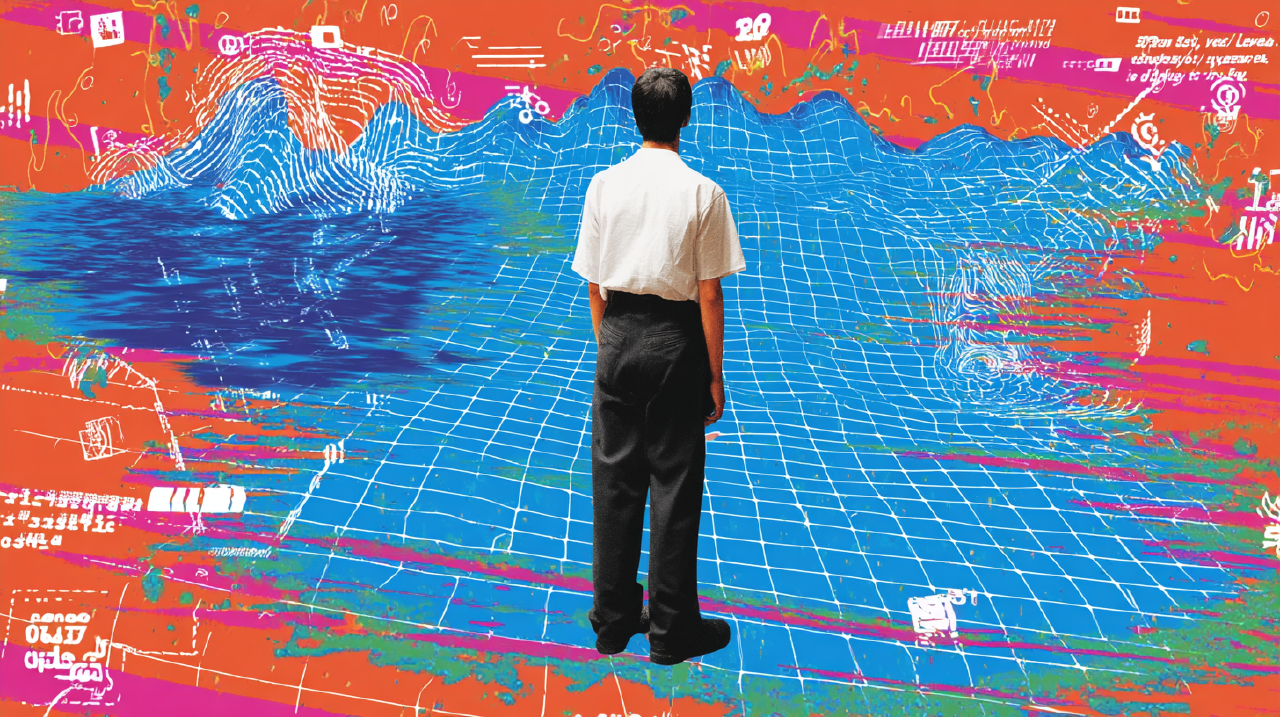
Most digital products are built like intersections in a dense city. Every system has right-of-way. Every message is a flashing light. Users spend their days at crosswalks, waiting for permission to proceed.
Flow is more like a trail in the backcountry. Fewer decision points, each one meaningful. The path does cognitive work for you. The environment supports forward motion.
Knowledge work, in practice, looks like the city.
Field studies of office workers found their days highly fragmented, with constant task-switching and “working spheres” interrupted more often than anyone likes to admit. 4 The result isn’t just lost time. It’s lost continuity.
And continuity is the precondition for everything product teams say they want: coherent strategy, good taste, careful tradeoffs, writing that doesn’t read like a Slack thread.
So what exactly breaks when we’re constantly interrupted?
Three things. Each one is brutal in its own way.
Switching has a cost, even when you switch well Link to heading
Task switching isn’t a free context change. Experimental work shows measurable “switch costs”: time and errors that accumulate when people alternate between tasks, especially as rule complexity increases. 5
This matters because product work is rule-heavy. A PM isn’t just switching tasks. She’s switching models: customer pain, business constraints, technical architecture, stakeholder politics, delivery timelines. That’s a lot of rule activation.
You can be skilled and still pay the toll. You can pay it quietly. But you pay it.
Stop calling this “multitasking” like it’s a superpower. It’s serial switching with overhead.
Interruptions change your physiology, not just your calendar Link to heading
In a classic study, researchers found something that sounds almost flattering: interrupted people completed tasks faster, with no quality difference. Then the real finding lands. Participants reported significantly higher stress, frustration, time pressure, and effort. 6
That’s the coping pattern many teams normalize. People “handle it” by sprinting. Output survives. The nervous system picks up the tab.
That’s why attention debates get heated around mental health: an interruptive environment trains a chronic compensation strategy.
Your product may not be “addictive.” It may simply be expensive in the currency of stress.
Even ignored notifications puncture attention Link to heading
There’s a comforting story we tell ourselves: I didn’t check it, so it didn’t cost me anything.
Research suggests otherwise. Phone notifications alone disrupted performance on attention-demanding tasks, even when participants never touched the phone. The distraction magnitude was comparable to actively using it. 7
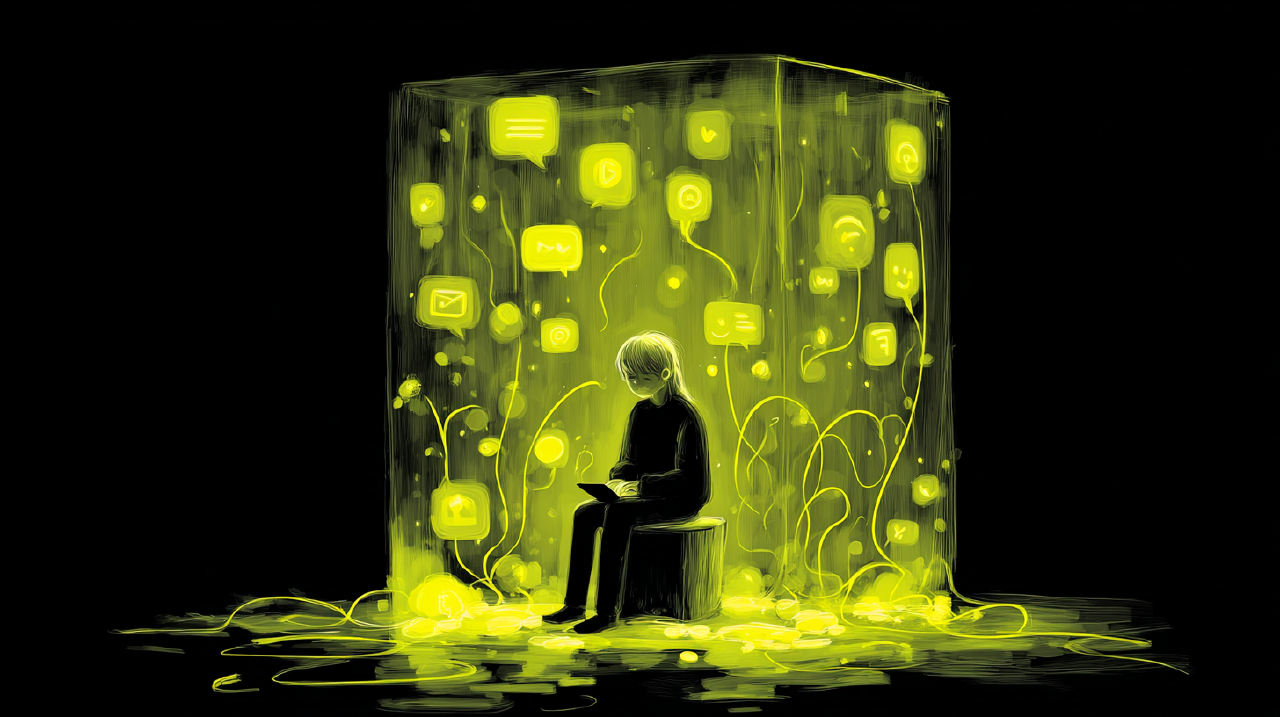
A notification isn’t a message. It’s a scheduling request that arrives with a siren.
If you design notifications, you’re not designing communication. You’re designing reorientation.
Why resuming feels like wading into cold water Link to heading
There’s another effect that shows up after switching: residue.
Sophie Leroy’s research describes how, when you switch tasks, some of your attention remains stuck on the previous one, especially if it felt unfinished. That leftover cognitive activity impairs performance on whatever comes next. 8
If you’ve ever returned to a doc and felt oddly stupid for the first five minutes, that’s not a moral event. It’s a transition problem.
This is also where the PM reading her first paragraph again stops being cute. She’s paying the cost of reconstruction. The mental model was never allowed to settle. Now she has to rebuild it from scratch.
Flow requires continuity. We build machines that shatter it.
What we’re actually building Link to heading
If flow is the condition where insight, creativity, and careful thought become possible, then what kind of minds are we building when we make flow structurally rare?
Csíkszentmihályi observed that the best moments in life tend to occur when a person’s body or mind is stretched to its limits in voluntary effort to accomplish something difficult and worthwhile. 2 Flow isn’t a productivity hack. It’s where meaning lives.
Newton needed uninterrupted solitude to see gravity in a falling apple. Einstein needed long walks and undisturbed thought to bend spacetime. We aren’t smarter than Newton or Einstein. We just have more pings.
The risk isn’t that we’ll become less efficient. Efficiency is fine. The risk is that we’ll become clever but unwise, good at reacting, bad at thinking; skilled at handling, incapable of holding. We’ll optimize for responsiveness until we’ve selected against depth.
This isn’t about individual discipline. You can’t meditate your way out of an architecture problem. The systems we build create the cognitive weather that everyone lives in.
If you build products, you are part of the weather.
The budget model Link to heading
Most products implicitly treat attention as infinite. If the user has a pulse and a screen, they can absorb one more alert.
A better model: attention is a budget. Switching burns it. Recovery isn’t instantaneous. 5
That’s not ideology. That’s mechanics.
Once you adopt the budget model, common product choices start to look like bad accounting. You stop asking “Can we notify?” and start asking “What does this spend buy, and what does it cost?”
That question isn’t anti-growth. It’s pro-value. You can’t create durable value by continuously breaking the conditions required to experience it.
Interruptibility is a state, not a default Link to heading
Most systems offer a binary: notifications on, notifications off. Humans don’t live in binaries. They live in contexts.
Design for interruptibility levels that match real life. Deep work: only true urgent channels break through. Normal: routine coordination can reach you, but not at full volume. On-call: higher interruptibility with clear boundaries and clear recovery. 9
The product implication: build a first-class interruptibility surface. Don’t bury it. Don’t make it shame-based. Make it legible and reversible.
Operating systems are moving this direction with focus features. 10 Product teams can respect it, integrate with it, and stop routing around it.
Notifications behave like scheduling, not marketing Link to heading
If a notification is a scheduling request, it must carry scheduling semantics: urgency, deadline, consequence of delay, expected response time.
Most notifications carry none of that. They arrive identical: same badge, same vibration, same posture. The system trains the user to treat every ping as potentially important, because the UI refuses to discriminate.
A humane notification system isn’t silent. It is selective. It earns urgency.
One design review question the research forces: “If a user ignores this notification, did we still steal their attention?” 7 If yes, the bar for sending it is high.
Continuity needs scaffolding Link to heading
Flow depends on clear proximal goals and immediate feedback. 2 Product work often fails both.
Goals drift. A PM starts writing a spec, but the actual success criteria are three meetings away. Feedback lags. You ship something and wait weeks to learn if it mattered.
Designers of systems can build scaffolding that makes goals and feedback more local. Break long workflows into checkpoints with tangible progress. Provide immediate feedback that reduces verification detours. Make “what good looks like” visible at the moment of action.
This isn’t gamification. It’s keeping the user inside the task world instead of sending them to search for reassurance.
Resumption is a feature Link to heading
Most products obsess over onboarding and ignore resumption. That’s backwards. In complex work, people resume far more often than they onboard.
Design guidance on interruptions comes down to one principle: reduce the cost of getting back. 9
Preserve working context: open items, cursor position, recent decisions. Surface what changed while the user was gone. Support lightweight scratch notes that travel with the task. Reduce the steps between “return” and “continue.”
If you want a clean metric: time-to-first-meaningful-action after resuming. If it’s high, your product is an attention tax collector.
Make the system honest about state Link to heading
In the physical world, the trail tells you when you’re off it. In software, state is often ambiguous. Ambiguity produces checking, refreshing, scanning, and reassurance behavior that looks like diligence but is actually self-interruption.
System status and feedback aren’t polish. They are attentional hygiene. 12
When the system is honest, the user can stop polling. Polling is the enemy of flow.
A note on contested research Link to heading
You will hear claims that the mere presence of a smartphone reduces cognitive capacity. One influential paper reported this. 13 A later preregistered replication did not find the same effect. 14
What do we do with that? We don’t turn it into ideology. We treat it as a hypothesis with mixed evidence.
But notice: we don’t need the “mere presence” effect to justify better design. We already have strong evidence that notifications disrupt attention and that switching carries costs. 5 8 That’s enough to act.
If your team is tempted to anchor on smartphone presence, steer them back to what’s less disputed: interruption pathways, resumption design, notification semantics.
Three experiments for next week Link to heading
You don’t need to win a philosophical debate about attention. You need to ship better defaults.
Run an interrupt budget audit. Pick one primary workflow. Instrument it. Count how many times you ask the user to reorient: notifications, modals, toasts, alerts, badge updates, cross-sells that hijack the visual hierarchy. Then ask: what fraction of these are actually time-critical? Most teams are shocked by their own numbers.
Design resumption before you design new features. Choose one interruption scenario common in your domain: user gets pulled into chat mid-task, user returns after a meeting, user comes back the next morning. Do a design review focused only on resumption, not completion. Can the user continue without reconstructing the world? 9
Stop calling everything a notification. Differentiate between indicators (passive state), status messages (feedback), and notifications (interruptive requests). When everything is labeled “notification,” everything behaves like a siren. Your UX vocabulary becomes your UX behavior. 12
Back at the trailhead Link to heading
Return to the PM and the blinking cursor.
Framing the fix as personal discipline is easy. Be tougher. Try harder. That story is tempting because it moves responsibility away from the systems we build.
Meh. That’s a dodge.
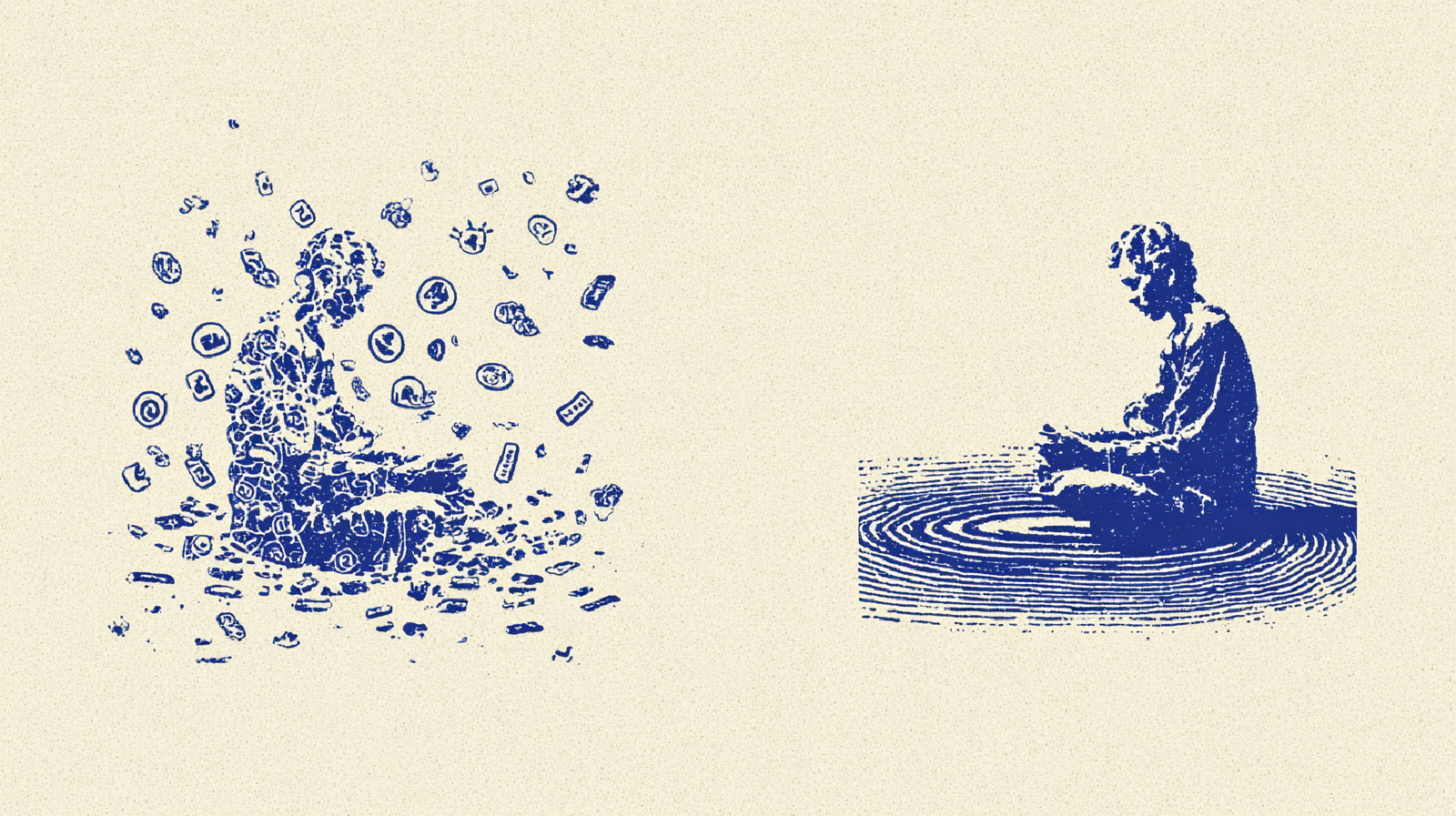
A better story is less dramatic and more useful. Flow is a corridor with known inputs: clear goals, fast feedback, challenge matched to skill, continuity strong enough for attention to settle. 2
Our tools keep turning that corridor into an intersection.
You can ship systems that treat attention like a free landfill, or you can ship systems that respect selection and reduce needless border crossings.
People don’t need silence. They need trails that hold.
Sources
- The Principles of Psychology (Chapter 11: Attention) William James (1890). Classics in the History of Psychology. 1
- Flow: The Psychology of Optimal Experience Mihaly Csikszentmihalyi (1990). HarperCollins. 2
- The Concept of Flow Jeanne Nakamura and Mihaly Csikszentmihalyi (2002). Handbook of Positive Psychology. 3
- No Task Left Behind? Examining the Nature of Fragmented Work Gloria Mark et al. (2005). CHI ‘05. 4
- Executive Control of Cognitive Processes in Task Switching Jeffrey S. Rubinstein, David E. Meyer, and Jeffrey E. Evans (2001). Journal of Experimental Psychology: Human Perception and Performance. 5
- The Cost of Interrupted Work: More Speed and Stress Gloria Mark, Daniela Gudith, and Ulrich Klocke (2008). CHI ‘08. 6
- The Attentional Cost of Receiving a Cell Phone Notification Cary Stothart, Ainsley Mitchum, and Courtney Yehnert (2015). Journal of Experimental Psychology: Human Perception and Performance. 7
- Why Is It So Hard to Do My Work? The Challenge of Attention Residue When Switching Between Work Tasks Sophie Leroy (2009). Organizational Behavior and Human Decision Processes. 8
- Designing for Long Waits and Interruptions Kate Kaplan (2021). Nielsen Norman Group. 9
- Summarize notifications and reduce interruptions with Reduce Interruptions Focus Apple Support. 10
- Designing for Serial Task Switching Nielsen Norman Group (2025). 11
- Indicators, Validations, and Notifications: Pick the Correct Method Nielsen Norman Group (2024). 12
- Brain Drain: The Mere Presence of One’s Own Smartphone Reduces Available Cognitive Capacity Adrian F. Ward et al. (2017). Journal of the Association for Consumer Research. 13
- Reexamining the “Brain Drain” Effect A. C. R. Pardo et al. (2022). Acta Psychologica. 14