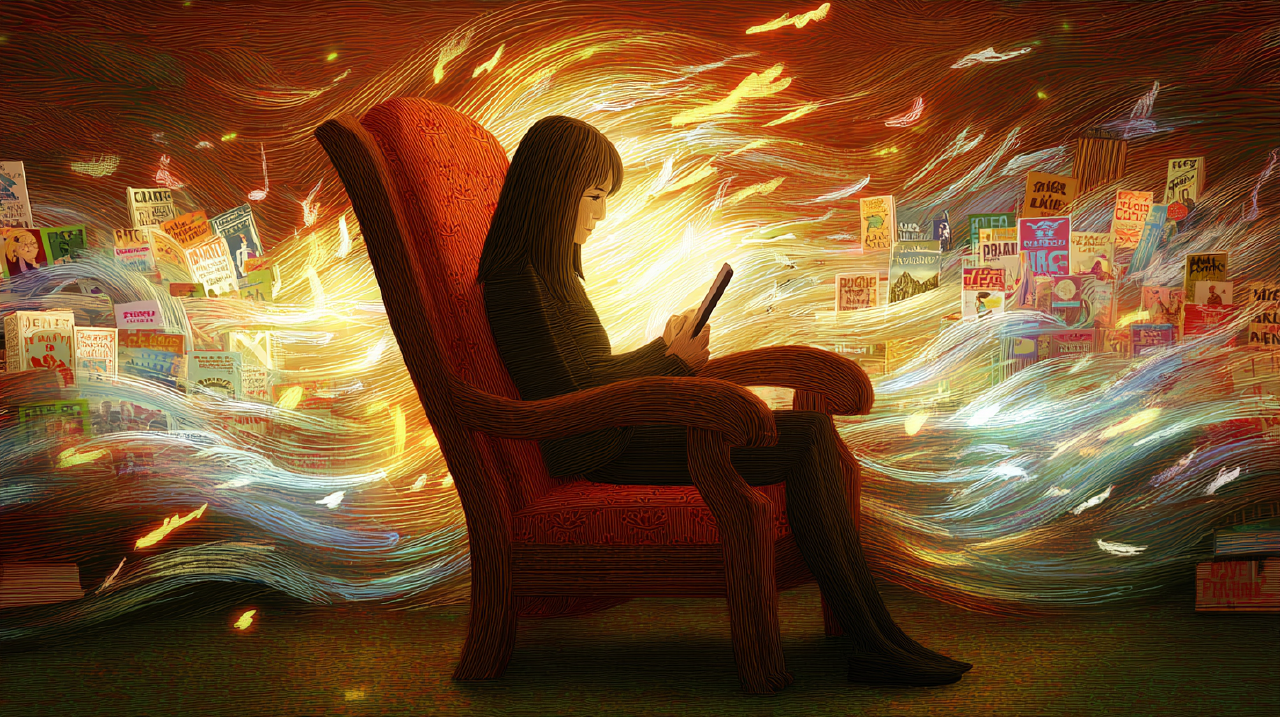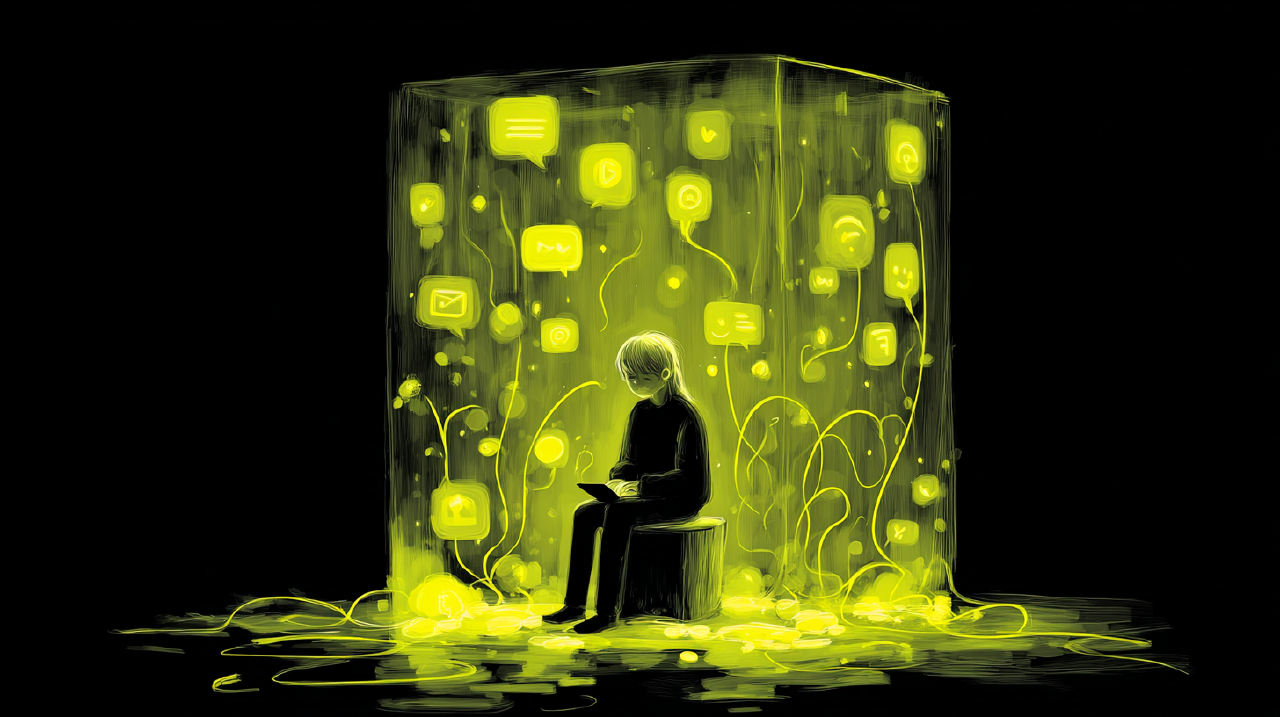


It’s late. You pick up your phone for something small and respectable. Weather. A message. The time.
The screen opens like a trapdoor and you drop through it in the boring, familiar way. One clip becomes three. One scroll becomes a lap. You don’t exactly choose to stay, but you also don’t leave.
That’s the signature move of the perpetual scroll. It doesn’t hold you down. It removes the exits.
A friend once called this “losing the closed sign.” Not the off switch, the closed sign. The quiet little notice that tells you: this place isn’t available right now, and that’s on purpose.
Modern software almost never says that. It’s always open. Always stocked. Always ready to sell you one more minute of yourself.
The trail closes at dusk Link to heading
In the backcountry you learn to respect closures early, because the environment is honest. Trails close for weather. Roads close for repairs. Parks close at dusk because erosion is real, people get lost, and winter is not a debate.
A closed sign is a kindness. It protects the land, and it protects the hiker.
Digital systems do the opposite. They remove friction until the experience has no edges. No dusk. No seasonal closure. No “last run.”
We’ve built entire cities that never sleep, then act surprised when the residents get weird.
The numbers make the load visible. DataReportal’s 2025 global report estimates adult internet users spend 6 hours and 38 minutes online each day 1 . That’s not “screen time.” That’s habitat time. And once a tool becomes habitat, defaults become norms. Norms become pressure.
Gloria Mark has measured attention switching for decades. In recent work, she describes a shift from about 2.5 minutes on a screen in 2004 to about 47 seconds before switching 3 . This is an average, not a worst-case number.
If you build software, that number makes you feel cold. It describes an environment that keeps pulling people off the trail, every few dozen seconds, and then wonders why nobody finishes the hike.
A field experiment published in the Journal of Occupational Health found that participants who disabled notifications for one day experienced beneficial effects on performance and strain (N=247) 2 . A single workday with fewer interruptions.
This isn’t a moral story about discipline. It’s a systems story about inputs.
Flood a channel with signals and the channel stops carrying meaning. People compensate by skimming, switching, working faster, staying half-alert all day. The body calls that state “stress.” The calendar calls it “Tuesday.”
Quiet is load-bearing. When you remove it, the system gets fragile.
The perpetual present isn’t neutral Link to heading
The deeper issue isn’t that people watch videos. The issue is that infinite digital environments compress time into a single, twitchy present.
In a feed, everything is “now.” In the inbox, every message is “now.” In a work chat, the social meaning of “seen” is “now.”
Even when the system offers asynchrony, it overlays a synchrony tax. Read receipts. Last active status. Typing indicators. Badges that glow until you obey them. The result is a quiet shift in moral physics: delay starts to feel like neglect.
Here’s where “digital sabbath” gets interesting, not as detox, not as a self-imposed timebox you’ll fail at by Tuesday. The interesting move is older. Sharper.
A sabbath isn’t a productivity technique. It’s a statement about what time is for.
Sabbath means “cease” Link to heading
The Sabbath is one of the most stubborn and structurally wise human inventions. Britannica notes the Jewish Sabbath comes from shavat, meaning “cease” or “desist,” observed from sunset on Friday to nightfall of the following day 4 . The definition is simple, but it does something profound: it gives the week an edge.
A sabbath isn’t “rest when you’re done.” It’s “stop because it’s time.”
Reverence is baked into that, in the older sense of treating something as real enough to organize life around, whether or not the frame is religious.
The Stoics had their own version, and it wasn’t cozy. Seneca tells Lucilius to “set apart certain days” to withdraw from business and live with the “scantiest fare,” to establish “business relations with poverty” 5 . A rehearsal. A way to reduce fear by visiting the feared condition on purpose, under controlled terms. Think less self-care, more cold shower for the soul.
Kant gave vocabulary for why this matters: dignity and autonomy. You aren’t free because nobody bothers you. You are free when you can choose your ends without being treated as someone else’s tool. Always-on design quietly treats attention as extractable; it creates environments where the “normal” user is the one who responds, clicks, consumes, confirms.
That’s not evil. It’s worse. It’s mundane.
Levinas adds another layer: the Other makes a claim on you, and that claim isn’t the same as an algorithm’s claim. A friend in trouble isn’t a badge count. A colleague who needs help isn’t a retention metric.
The modern attention economy blurs these claims together. Everything feels equally urgent, equally deserved, equally “now.”
That’s how you get a workplace where people can be “high-performing” and quietly unusable to their own families.
The shared lesson across these traditions isn’t “go offline.” The lesson is: time needs edges, and edges need practice. If you never practice stopping, you eventually lose the ability to stop without panic. You start to treat quiet as suspicious. Like an error state.
That’s not a character flaw. That’s a learned dependency.
The alternative architecture Link to heading
A lot of “digital wellbeing” design has the texture of a speed bump installed by someone who doesn’t drive the road. Mid-flow prompts that say “take a break” become another irritation to dismiss. They outsource moral responsibility to UI nags.
If we want sacred time in a digital environment, we design it the way the physical world does: through terrain changes, cues, and closures that make sense.
The goal isn’t interruption. The goal is orientation.
Now imagine this actually built as architecture, not as a scolding popup.
Take TikTok, the cleanest example of lean-back consumption. The interface is engineered for a yes/no response loop: watch, swipe, heart, repeat. Effective. Time-flattening. What if it introduced an intentional rhythm change that felt less like a lecture and more like a trail junction?
Call it a “Sabbath hour” if you want the reverent framing. Call it “Quiet mode” if you don’t. The label matters less than what happens inside.
During that interval, the app doesn’t become empty. It becomes different.
The feed stops refreshing. In its place: a rotation of prompts that require making, not reacting. A “reply with a story” affordance that privileges longer, slower responses. A remix lane that pulls from your saved videos and asks for synthesis: What changed your mind this week? A viewing cap that ends with a clean stopping point: You’ve reached the end of today’s set. Save what mattered. Come back tomorrow.
A season, not a nag.
The system stays digital and intelligent. It just stops pretending that the highest form of human engagement is passive consumption at scale. It trades extraction for expression. And in doing so, it gives users something almost no platform currently offers: a reason to feel finished.
Here’s what edges feel like when they’re designed, not imposed.
Temporal dignity as product requirement Link to heading
If you build products, you already shape time. You just do it implicitly.
You decide whether “now” is the default. You decide whether people can leave without fear. You decide whether there are endings.
We already treat some human constraints as design requirements. Battery life. Accessibility. Latency. Privacy. Time deserves the same status.
Time has always been scarce. The problem is that time without edges becomes undignified, a slurry of partial attention and low-grade obligation.
Policy helps but doesn’t substitute for culture. Eurofound notes that even where the right to disconnect exists, not all companies adopt policies that make it real 6 . Screens can be turned off. Norms are harder.
So we build norms into systems. Six ways to start:
Default to quiet outside work hours. Make weekend and night notifications opt-in at the workspace level, with clear on-call exceptions.
Create endings in infinite surfaces. Add natural stopping points: daily sets, weekly wrap-ups, “you’re done here” states that feel respectful, not patronizing.
Batch the non-urgent by design. Turn informational pings into digests. Reserve interrupts for true exceptions.
Make absence socially legible. Status needs to protect people, not just signal availability. Delay delivery, suppress receipts, set expectations automatically.
Offer mode shifts, not guilt prompts. Build seasonal rhythms: focus-first mornings, quiet lanes, participatory intervals that change what the system rewards.
Measure after-hours pressure like a reliability metric. Track off-hours messages sent, notifications delivered, weekend escalation rates. Put it on a dashboard. Treat regressions like bugs.
The unsettling part Link to heading
If you want a quick test of whether your tools have edges, try this:
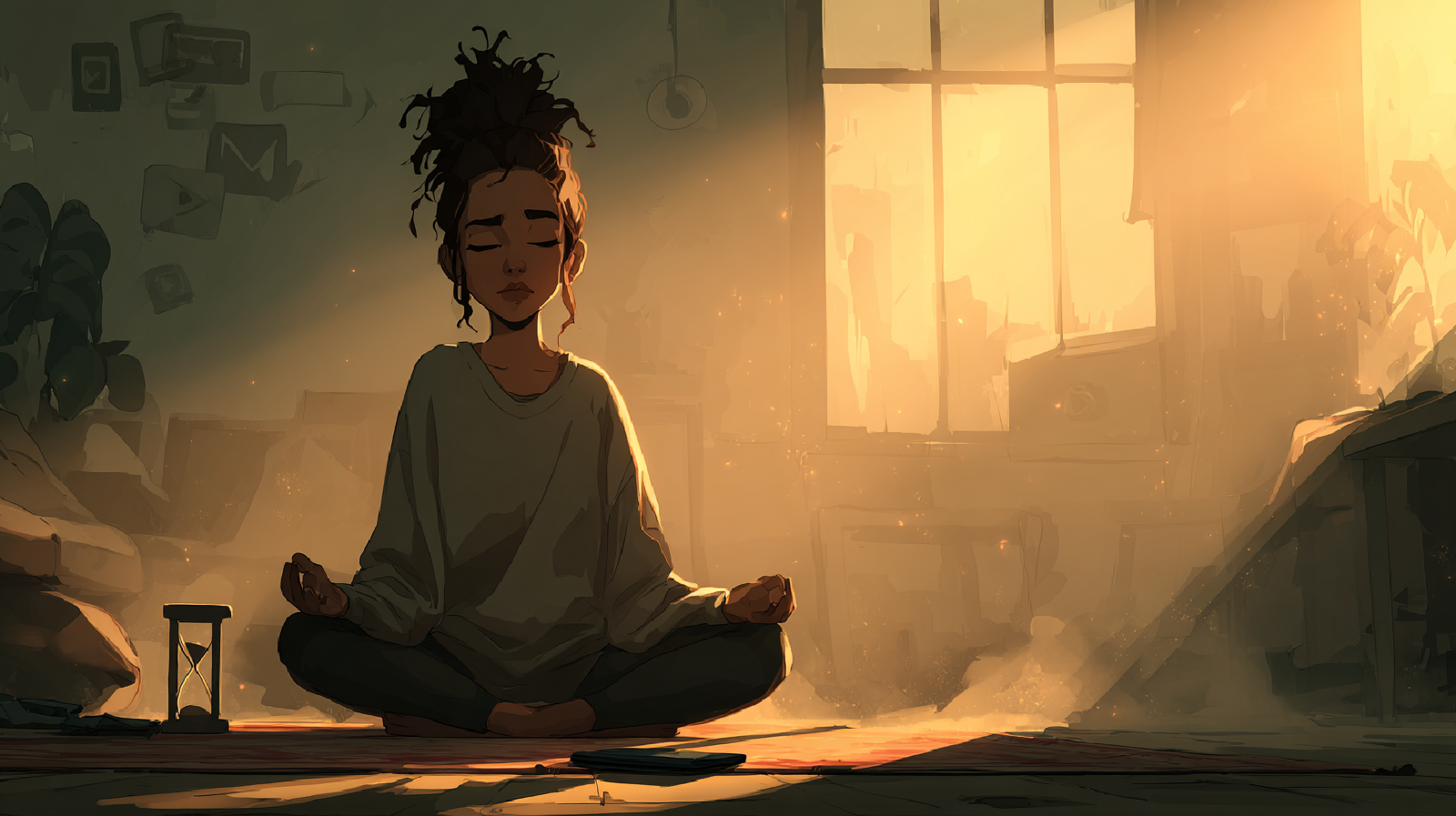
Pick up your phone. Don’t unlock it.
Just hold it for ten seconds.
If that sounds easy, you probably haven’t tried it lately.
The reflex isn’t a personal failure. It’s the muscle memory of living in a system that rarely closes. A system that quietly trains you to keep moving because it never tells you it’s safe to stop.
In the mountains, you can ignore dusk for a while, but the light still changes. The cold still arrives. The body still calls you home.
In the scroll, the light doesn’t change. The weather doesn’t arrive. The only thing that ends the session is exhaustion, or an external interruption, or shame.
Quiet is load-bearing. We can keep removing it and the structure may still stand for a while.
Then one day you notice you have not rested, in any deep sense, in years. And you realize the problem was never your willpower. It was the architecture. You were living in a building with no doors.
The scroll doesn’t steal your time. It erases the place where you stop.
Sources
- Digital 2025: Global Overview Report Simon Kemp (2025) DataReportal. 1
- Effects of task interruptions caused by notifications from communication applications on strain and performance Sandra Ohly & Luca Bastin (2023) Journal of Occupational Health (Oxford Academic). 2
- Our 47-Second Attention Span With Gloria Mark (S5: EP3) Transcript Steelcase (n.d.) Work Better podcast transcript. 3
- Sabbath | History, Meaning & Observances Encyclopaedia Britannica Editors (n.d.) Britannica. 4
- Moral letters to Lucilius: Letter 18 Seneca (n.d.) translation hosted on Wikisource. 5
- Do we really have the right to disconnect? Oscar Vargas Llave (2022) Eurofound. 6