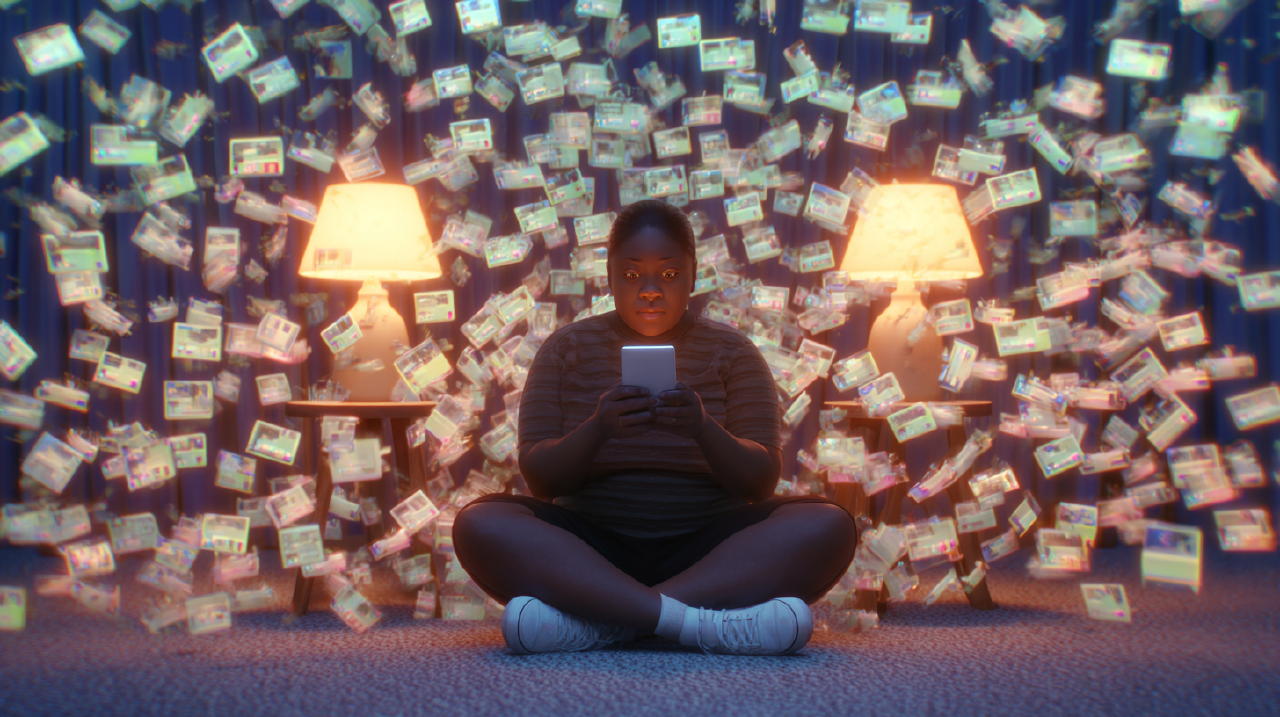
The industry taught digital builders that friction is failure. Link to heading
Every design review since the early 2000s has drilled the same mantra:
simplify, streamline, remove friction.
- Fewer clicks = better conversion
- Shorter forms = happier users
- Faster load = higher retention
And they weren’t totally wrong, just incomplete.
Because ease without thought isn’t progress. It’s drift.
Digital design made smoothness the metric of success.
Now we’re realizing what we lost: traction, attention, and meaning.
Not all friction is the enemy. Link to heading
Friction is resistance that shapes engagement, decision-making, and movement.
It’s neither good nor bad—it’s the texture that makes action real.
- Counterproductive friction scatters attention and kills intent.
- Constructive friction anchors thought and restores agency.
Imagine the “one-tap checkout” that hides total cost until the end.
Or the “Are you sure?” prompt that gives you one last look before posting.
Same interface pattern—opposite moral outcomes.
Designers don’t control what friction is;
they control how that resistance is felt.
What feels like drag to one user might be traction to another.
That’s not failure. That’s context.
Friction is a design material, not a bug. Link to heading
Used well, friction is like grip tape on a skateboard—just enough to steer,
not enough to wound.
- A progressive wizard slows a novice long enough to learn.
- A bulk-edit view removes it for the expert.
- An AI-assisted code editor can test both in seconds and adapt.
With automation and generative tools, we can now ship multiple implementations
and react to preference in real time.
That raises the stakes: we can no longer pretend friction is accidental.
Every delay, confirmation, or pause is a design choice—
a bet about what deserves weight.
When friction disappears, so does depth. Link to heading
A frictionless world isn’t utopia. It’s anesthesia.
Remove every pause and you also remove:
- the moment to double-check intent,
- the breath that separates impulse from action,
- the chance to own what you just did.
Good designers know that not every bottleneck is a bug.
Some are mirrors.
Friction isn’t there to punish.
It’s there to remind you that something matters.
Friction becomes traction. Link to heading
In physics, friction is what lets you walk without slipping.
In nature, it’s how vines climb and seeds take root.
Without friction, wheels spin.
Feet slide.
Nothing moves with intention.
Human systems work the same way.
Friction gives actions texture, adds weight to decisions, and shapes memory.
Used poorly, it frustrates.
Used well, it focuses.
Friction isn’t an error. It’s an element.
Not a flaw to remove, but a force to work with.